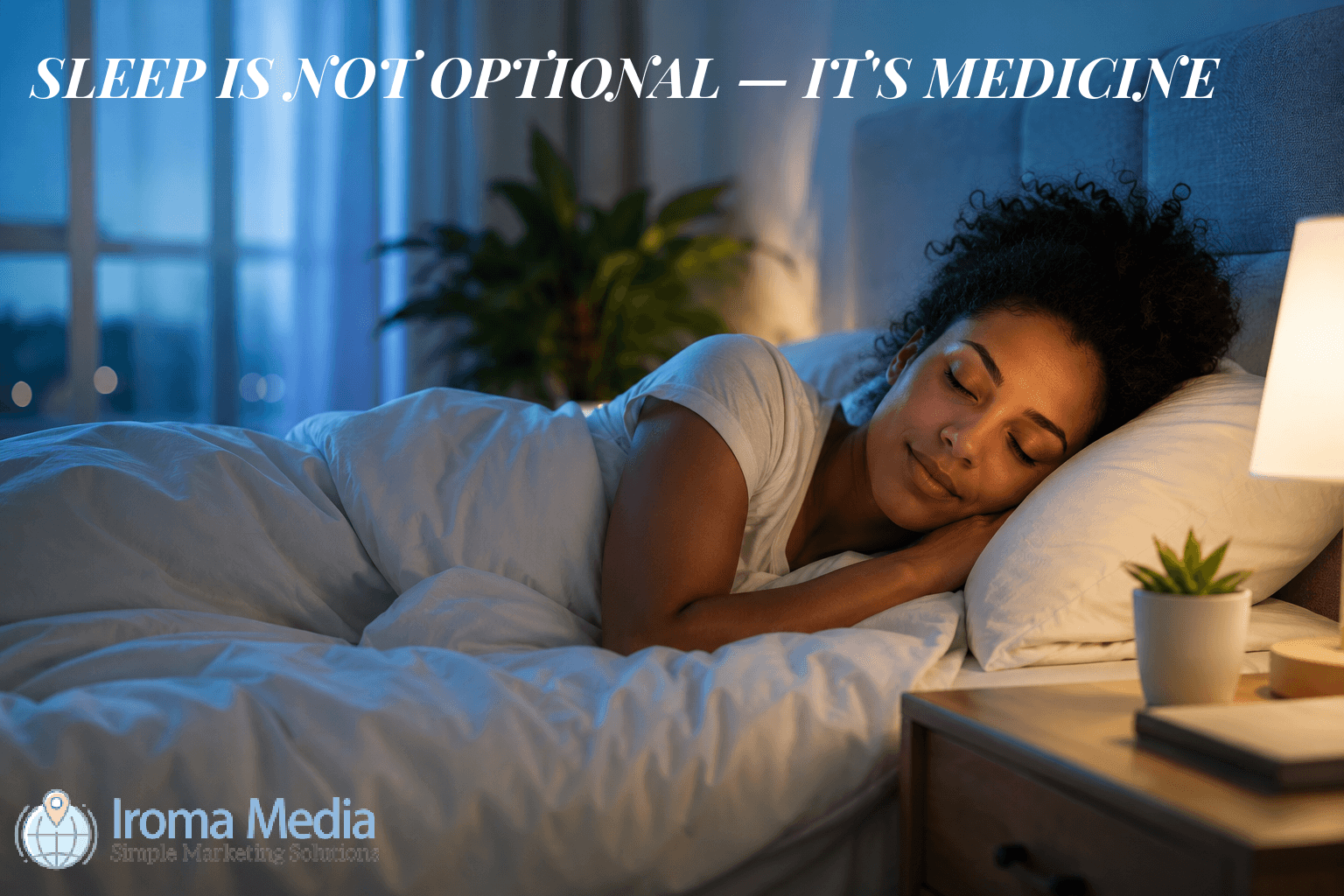
SLEEP IS NOT OPTIONAL — IT'S MEDICINE
We live in a culture that quietly celebrates exhaustion. Getting by on
five hours is worn like a badge of honour. "I'll sleep when I'm dead"
is a phrase people say with a straight face. And yet the science on
sleep is about as clear as it gets in human health research: chronic
sleep deprivation doesn't just make you tired. It shortens your life,
shrinks your brain, and quietly dismantles every other health habit
you're trying to build.
Sleep is not passive recovery. It is your body's most active
maintenance window. And in 2026, the research is impossible to ignore.
The Global Wellness Institute named sleep one of its major focus areas for the year, citing chronic circadian disruption as a growing health crisis linked to metabolic disorders, cardiovascular disease, impaired cognition, and mood dysregulation.
One in three adults in the US now sleeps fewer than 7 hours a night — a figure that has doubled since the mid-1980s. In the UK, similar
patterns are emerging. The consequences are accumulating quietly, in bodies and minds everywhere.
BY THE NUMBERS
- 1/3 of US adults sleep fewer than 7 hours per night — nearly doubled since 1985 (American Academy of Sleep Medicine)
- 700+ sleep and circadian studies published using UK Biobank data, linking poor sleep to mortality and disease (UK Biobank, 2026)
- 20% of the body's total energy goes to the brain — and sleep is when it cleans house, resets, and consolidates everything you learned.
WHAT ACTUALLY HAPPENS WHEN YOU SLEEP
Sleep is not a blank. It is a full biological programme running in
the background.
During deep sleep, the brain's glymphatic system activates — a
waste-clearance process that flushes out metabolic toxins, including
beta-amyloid proteins associated with Alzheimer's disease. Miss this
window consistently and those proteins accumulate.
Your emotional circuits reset. Research published by the American
Psychological Association (2026) found that sleep plays a critical role in emotional regulation — poor sleep increases negative emotional reactivity and stress vulnerability. It's not that tired people are grumpy. It's that their brains literally process threat differently
when under-rested.
Memory consolidates. A meta-analysis of sleep and learning studies
found that sleep deprivation — whether before or after learning — had a significant detrimental impact on the retention of new material.
You can study all you like. Without sleep, less of it sticks.
Hormones regulate. Growth hormone, cortisol, insulin, leptin, ghrelin —all governed in part by your sleep-wake cycle. Disrupt sleep and you disrupt appetite regulation, stress response, immune function, and metabolic health simultaneously.
YOUR CIRCADIAN RHYTHM — THE MASTER CLOCK
The circadian rhythm is your body's master biological clock. It governs not just sleep but hormone production, metabolism, immune function, and cognitive performance — all anchored in the suprachiasmatic nucleus of the brain and synchronised primarily by light exposure.
Modern life works against it almost by design. Artificial lighting,
late-evening screens, irregular schedules, shift work, and jet lag all
contribute to what researchers call circadian misalignment. And the
consequences are clear: the Global Wellness Institute cites research
linking chronic circadian disruption to metabolic disorders, impaired
cognitive performance, mood dysregulation, and elevated cardiovascular risk (Vetter, Nature Reviews Endocrinology, 2020).
The good news is that your circadian rhythm is remarkably responsive to the right inputs. Small, consistent adjustments make a significant difference.
5 SLEEP UPGRADES THAT ACTUALLY WORK
1. ANCHOR YOUR WAKE TIME
Consistency in when you wake is more powerful than when you go to sleep. A fixed wake time — even at weekends — is the single most effective way to regulate your circadian rhythm. Your body builds its entire hormonal day around it.
2. MORNING LIGHT, FIRST THING
Natural light exposure within 30–60 minutes of waking sets your
circadian clock for the day, boosting cortisol at the right time
(so it falls at the right time later). Even on overcast days, outdoor
light is significantly more powerful than indoor lighting.
3. WIND DOWN YOUR SCREENS
Blue light from screens suppresses melatonin — the hormone that signals sleep onset. Reducing screen exposure 60–90 minutes before bed allows natural melatonin production. If screens are unavoidable, blue-light filtering (Night Shift, f.lux, or physical glasses) helps.
4. KEEP YOUR BEDROOM COOL AND DARK
Core body temperature needs to drop to initiate and maintain sleep.
A cooler room (around 16–18°C) supports this process. Blackout
curtains or a sleep mask remove light cues that signal wakefulness to the brain.
5. STOP TRACKING YOUR SLEEP ANXIOUSLY
Clinicians have named a new condition — orthosomnia — sleep
hypervigilance triggered by wearable sleep data. If your sleep
tracker is making you anxious about your sleep, consider whether it is helping or harming. Sometimes the most powerful sleep upgrade is trusting your body.
YOUR SLEEP RITUAL — TONIGHT
-----------------------------
7pm — Last caffeine. Caffeine has a half-life of 5–7 hours. That afternoon coffee is still in your system at midnight.
9pm — Dim the lights and reduce screen use. Signal the brain that the day is winding down.
10pm — One short body scan or breathing exercise (4-7-8 breath or box breathing). Activates the parasympathetic nervous system.
10:30pm — Pen one thing that went well today. Closes mental loops and shifts the brain toward positive consolidation before sleep.
FAQ SECTION
Q: How many hours of sleep do adults need?
A: Most adults need 7–9 hours of sleep per night according to
the American Academy of Sleep Medicine.
Currently one in three US adults sleeps fewer than 7 hours —
a figure that has nearly doubled since the mid-1980s.
Chronic sleep deprivation is linked to cardiovascular disease, metabolic disorders, impaired cognition, and reduced immune function.
Q: What is the glymphatic system and why does it matter for sleep?
A: The glymphatic system is the brain's waste-clearance network,
which becomes most active during deep sleep. It flushes out
metabolic toxins including beta-amyloid proteins associated
with Alzheimer's disease. Consistently missing deep sleep
allows these proteins to accumulate over time.
Q: What is orthosomnia?
A: Orthosomnia is a clinically recognised condition where
anxiety about wearable sleep data disrupts actual sleep
quality. If your sleep tracker is making you more stressed
about sleep rather than less, it may be counterproductive.
Q: What is circadian rhythm and how do I fix it?
A: Your circadian rhythm is your body's master biological clock,
governed primarily by light exposure. It regulates sleep,
hormones, metabolism, and mood. To support it: maintain a
consistent wake time daily, get natural light within 60
minutes of waking, and reduce artificial light exposure in
the 90 minutes before bed.
REFERENCES
----------
Global Wellness Institute, Sleep Initiative Trends 2026
American Psychological Association, new science of sleep (June 2026)
Vetter, Nature Reviews Endocrinology (2020), circadian disruption
UK Biobank Sleep and Circadian Health Report (2026)
American Academy of Sleep Medicine, adult sleep statistics
Frontiers in Neuroscience, circadian rhythms and healthy ageing (March 2026)
ScienceDirect, circadian disruption and long-term health consequences
0 Comments
Join the conversation
Be the first to comment
Share your thoughts above.